Responsibilities
Initial research and ideation, concept design, core flow design, collaboration with lead designer who took the project forward, cross-functional work with product management and engineering
Client
Vertice
Year
2023-2024
Info
Intelligent Workflows is Vertice’s workflow automation product for procurement teams, a canvas-based builder that lets businesses create custom approval flows for any purchasing process, from ordering office supplies to multi-stage enterprise contracts. I led the initial design phase: research, conceptual exploration, and the first working version of the canvas and task configuration system. Another designer took the project forward through later iterations while I continued contributing to specific flows.
THE CHALLENGE
Procurement workflow builders already existed. The category had clear conventions: canvas-based interfaces, drag-and-drop tasks, conditional routing. The question wasn’t whether to build a workflow builder, but how to build one that felt genuinely better.
The technical foundation engineering proposed was Business Process Model and Notation (BPMN), a system powerful enough to model the logic of a nuclear reactor. The design problem was making that power legible to a CFO or procurement specialist who had never opened a workflow builder before. Too simple and we’d lose enterprise customers with complex contracting flows. Too technical and we’d lose the people who actually did the work day to day.
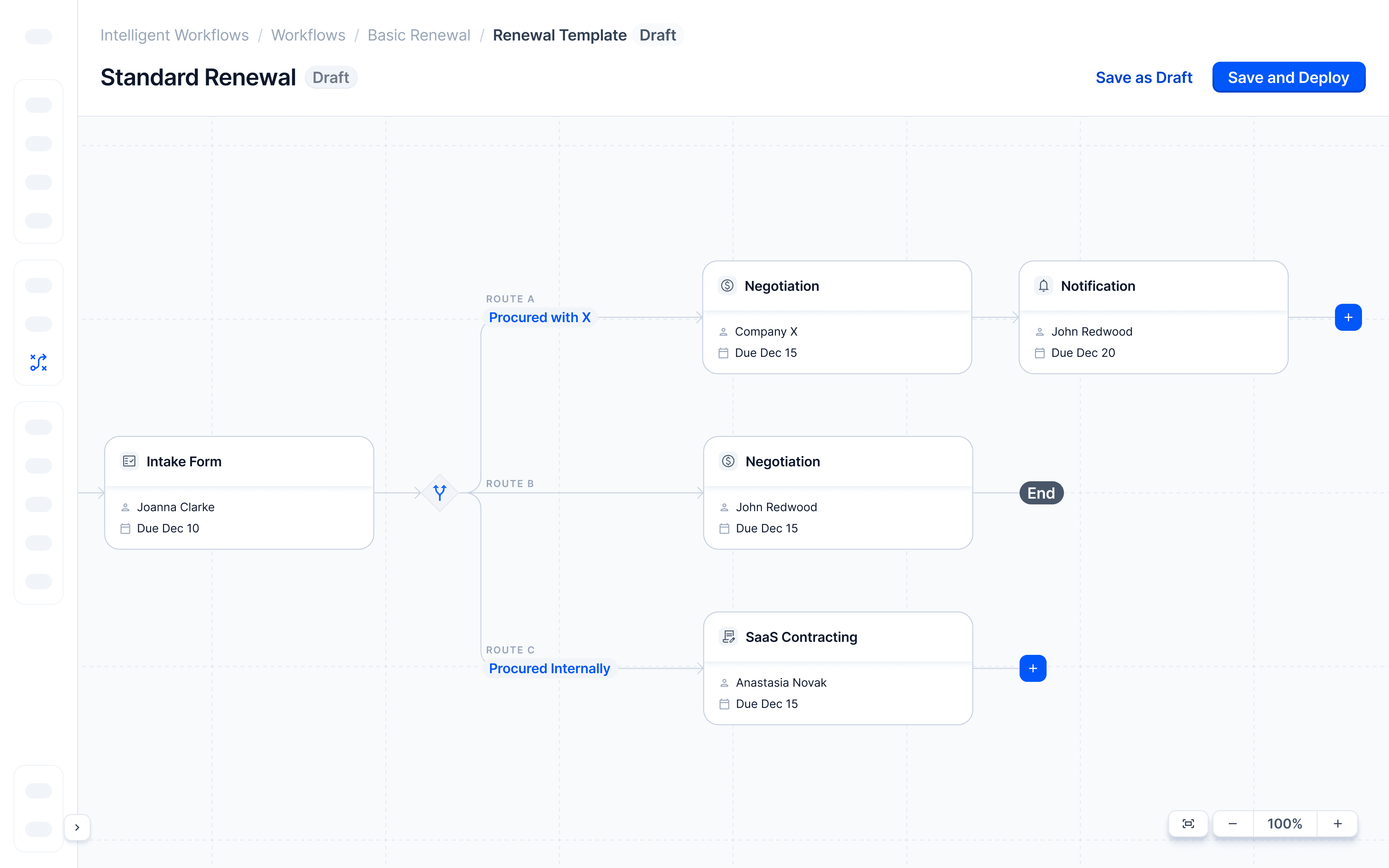
The canvas is the spatial map of the procurement process. Routing nodes branch based on conditions; tasks are assigned with due dates; everything stays on one surface so stakeholders can see the full flow at a glance.
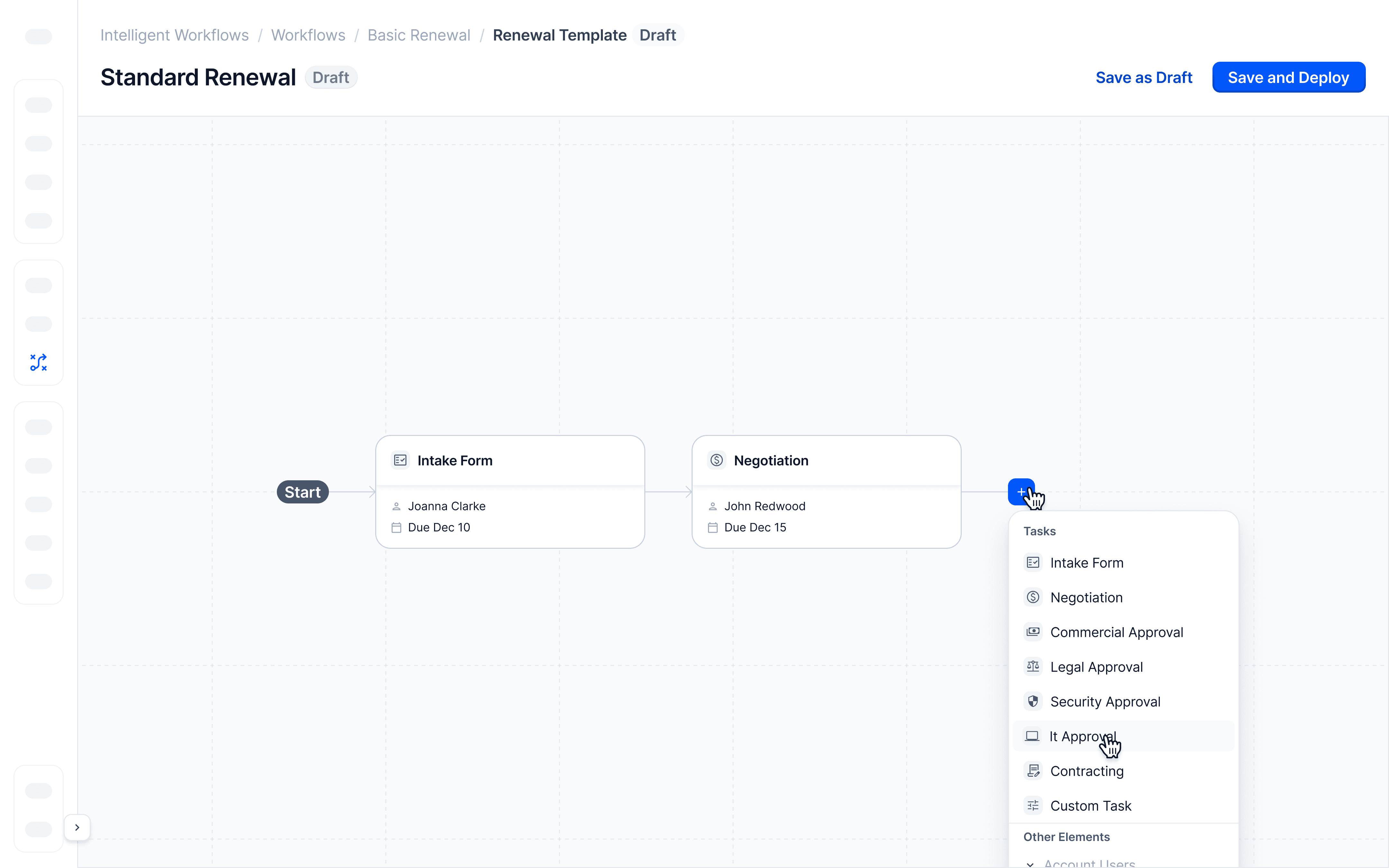
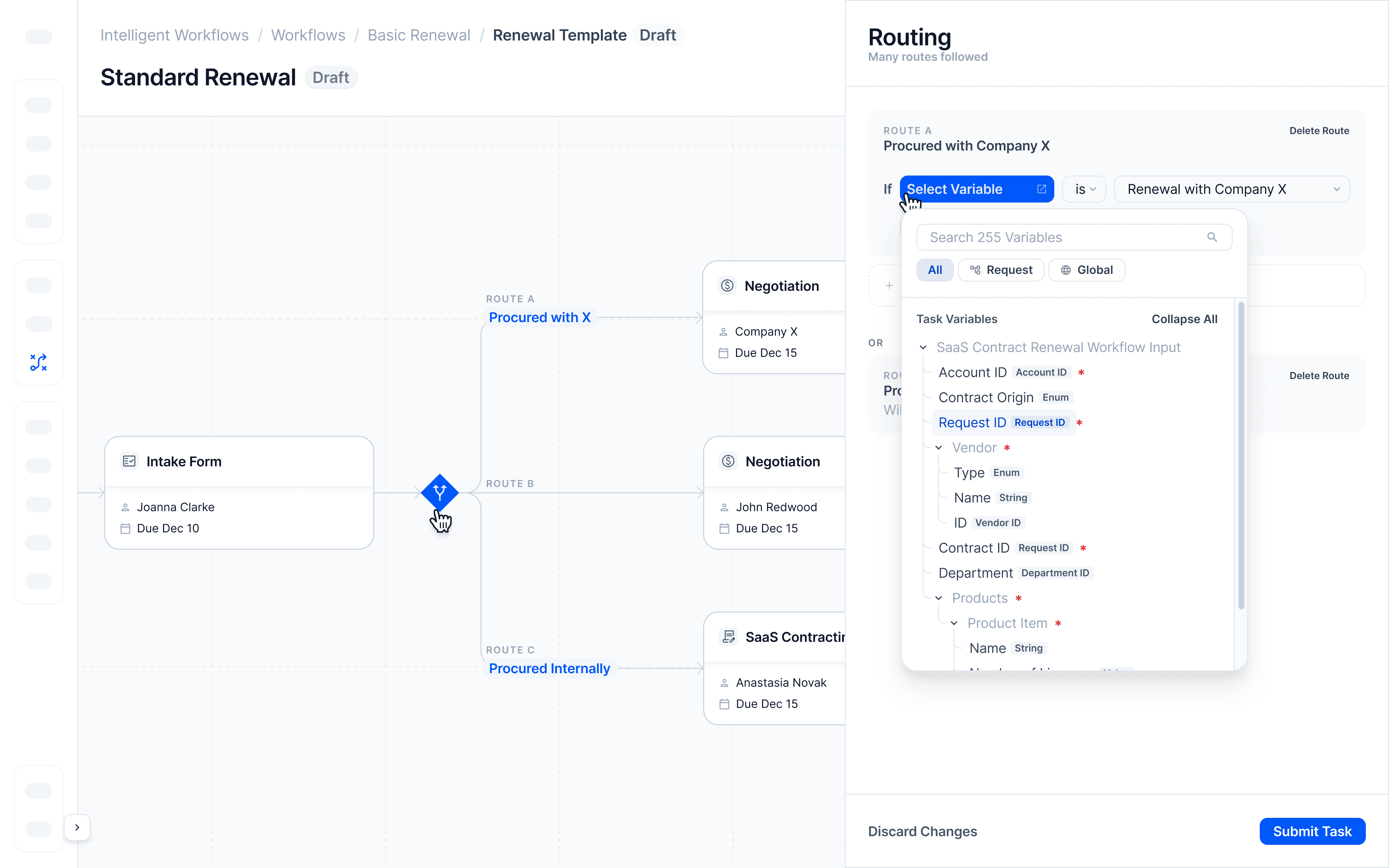
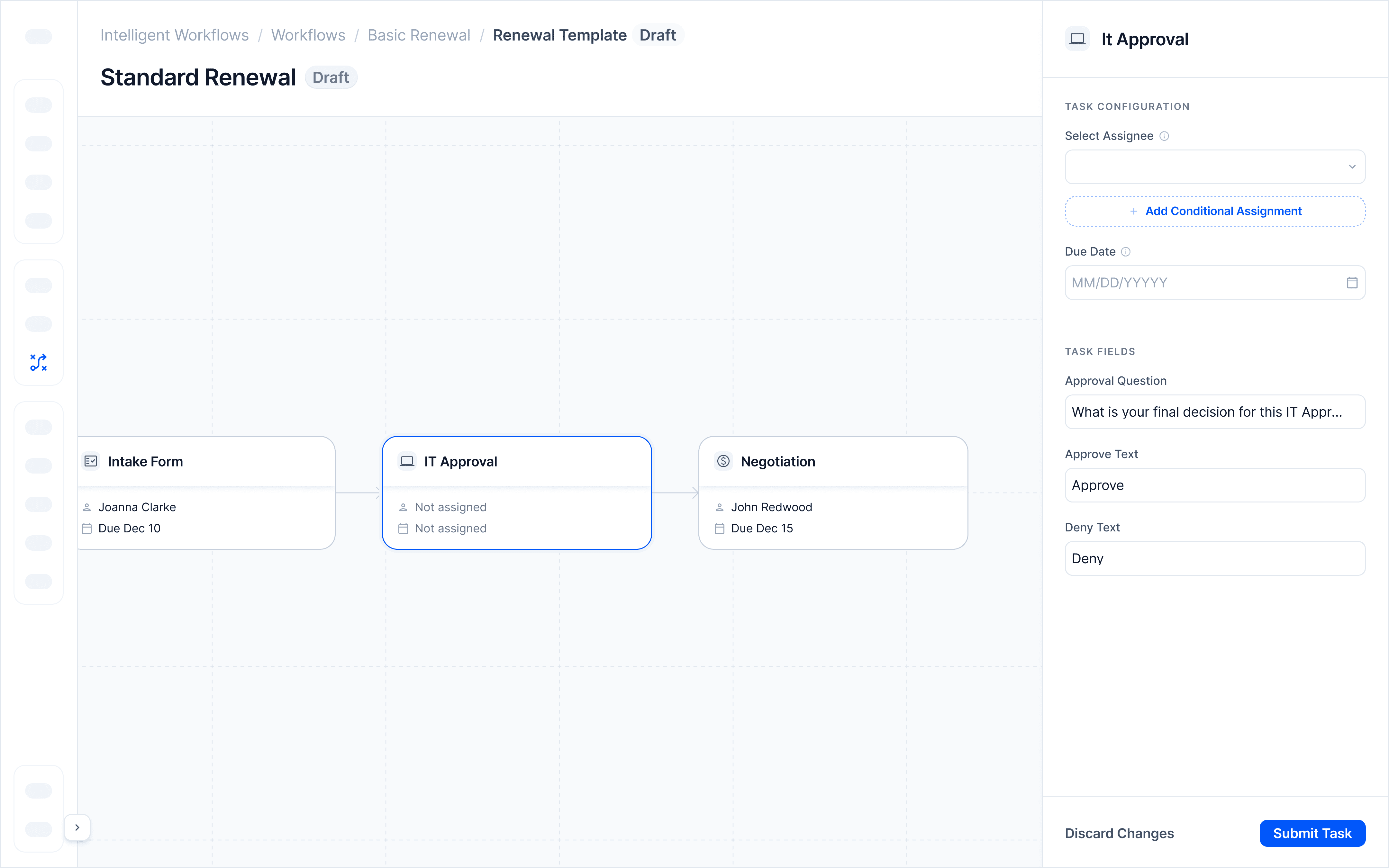
Task types are pre-built for common procurement actions: intake forms, negotiations, approvals, contracting, but can be extended with custom tasks. The goal: cover the common cases out of the box, preserve flexibility for the unusual ones.
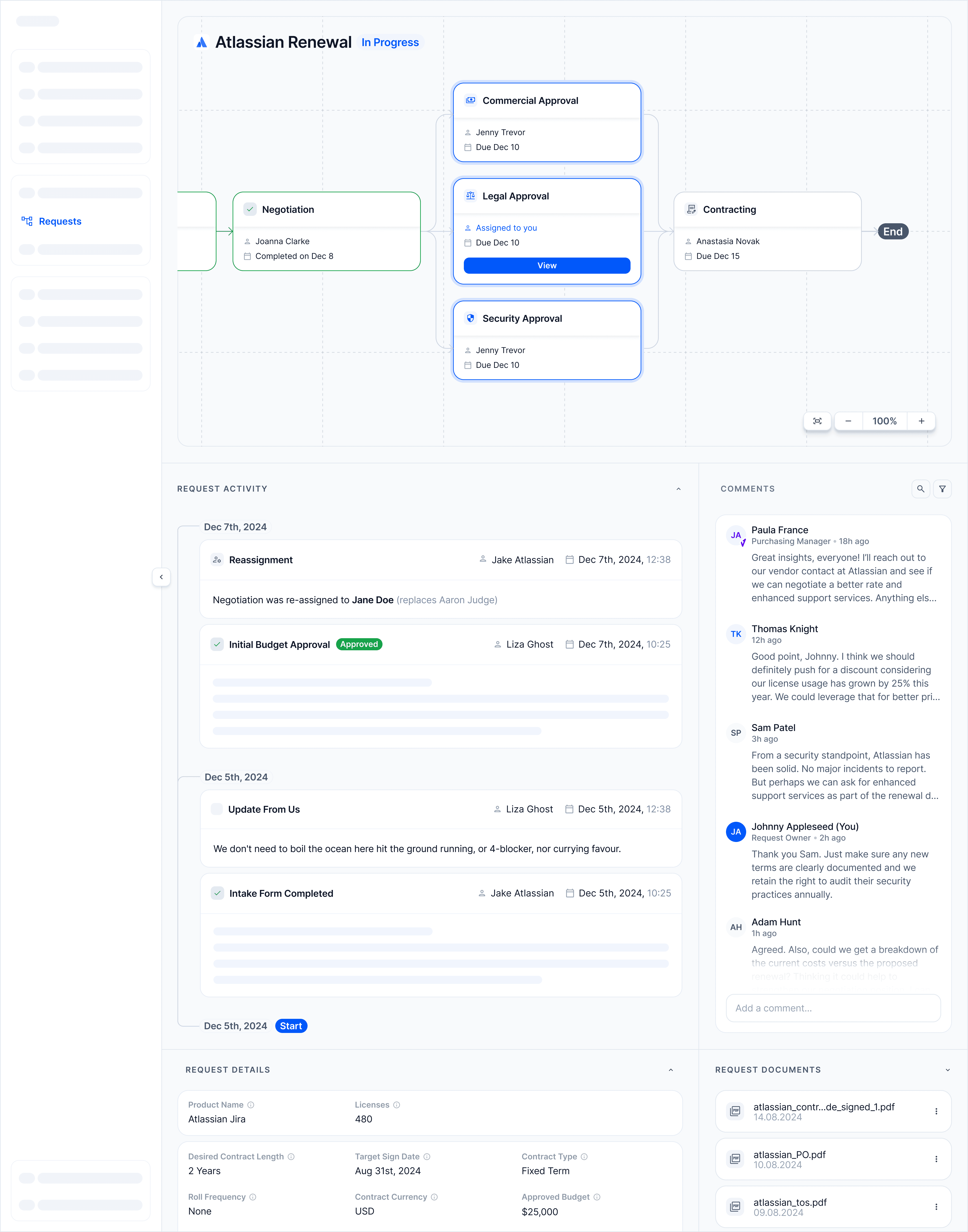
Once deployed, the same canvas shows workflow progress in real time: completed, in-progress, and pending tasks stay visually connected to the original flow. Stakeholders always know where a request stands.
Most procurement teams we talked to didn’t run their processes in dedicated tools. They ran them on paper, in scattered docs, or in someone’s head. When that person went on holiday, everything stopped: no reminders, no deadlines, no fallback path. Many teams didn’t even have a clear sense of what good workflow design looked like in the first place. They knew their current process was broken; they didn’t know what better looked like.
This shaped two design decisions that did most of the work.
First, defaults that hide complexity. The canvas opens with a minimal vocabulary: tasks, routes, assignees, due dates. Everything BPMN could do was reachable, but only when you asked for it. New users saw a tool that looked simpler than it was. Power users discovered the depth as they needed it.
Second, templates encoded best practices. We built starter templates for the common cases: standard renewals, new vendor approvals, SaaS contracting. These weren’t blank canvases. They were opinionated starting points that taught users what good looked like by example. We also designed for the failure modes of real teams: backup assignees for people on holiday, automated reminders, deadline tracking, so workflows kept moving when people didn’t.
ImPact
Played a pivotal role in Vertice securing a $50M Series C round
First wave of deployments halved time to process procurement requests
Automated 70% of previously manual approval steps
Reduced maverick spending on tech by 33%